
A Starlink Mini magnetic mount needs a suitable magnetically attracting surface and a reviewed installation—not merely a roof that looks metallic. Aluminum, glass and composite panels are not direct magnetic attachment targets. Even when a magnet attracts a steel panel, that does not prove the panel or complete mount is suitable for the intended use.
Start by identifying the exact terminal, mounting surface and operating conditions. This is a sourcing guide, not vehicle installation approval or a road-use recommendation.
What CRF’s current product evidence supports
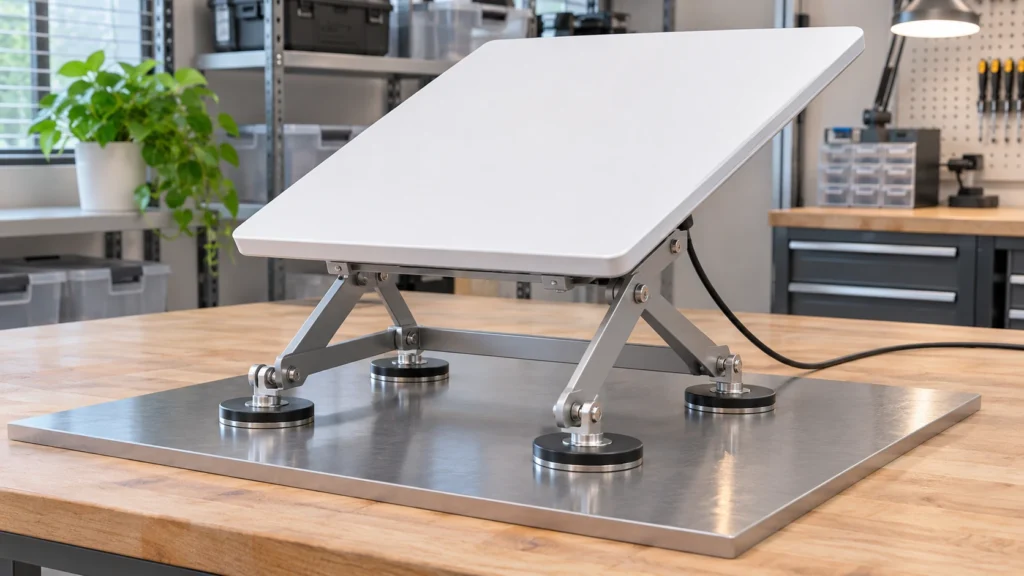
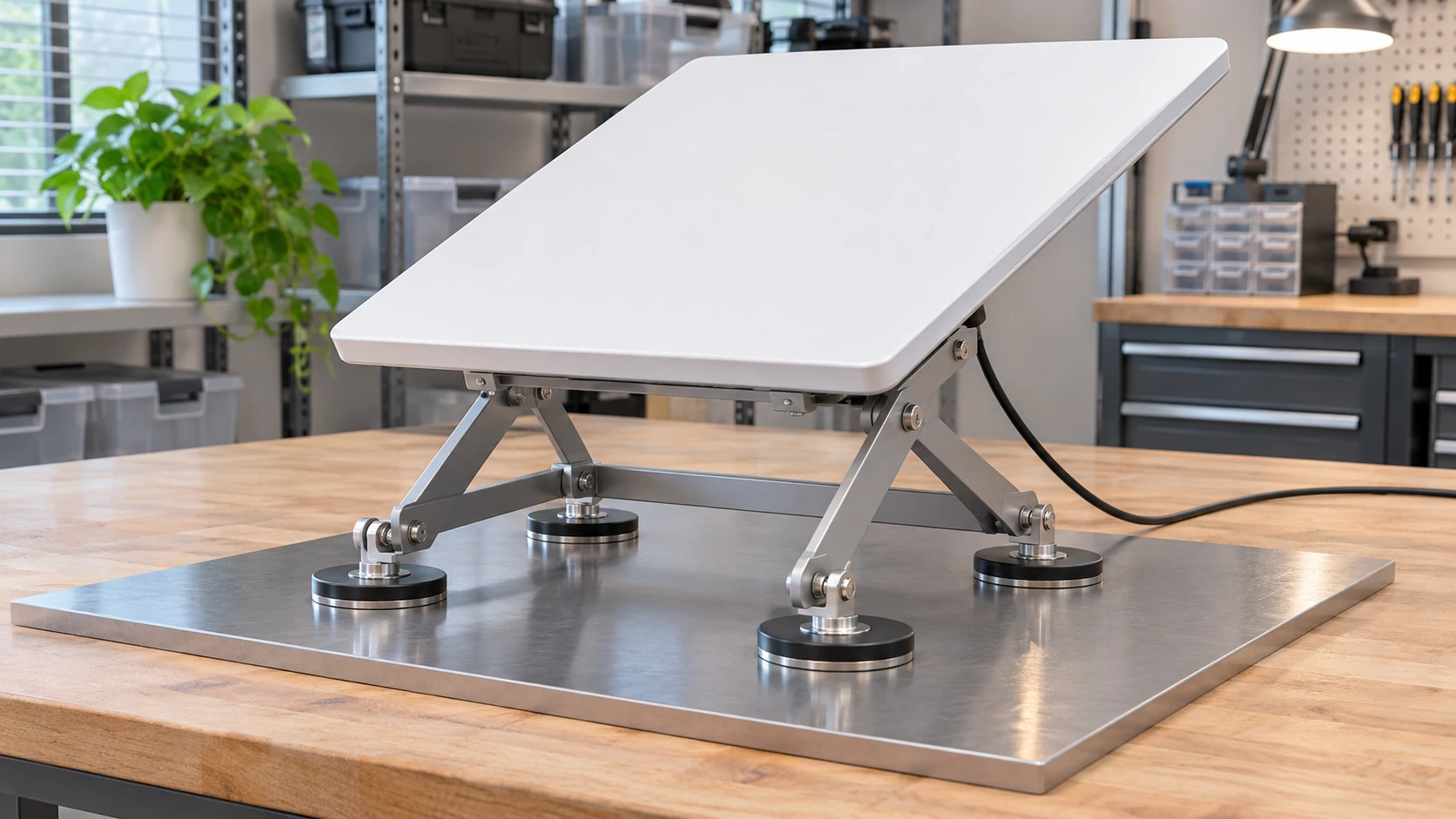
The adjustable magnetic mounting plate listed for Starlink Mini shows a frame with four circular magnetic bases and an adjustable support platform. Its public page describes temporary use on suitable ferromagnetic steel surfaces.
The page also discloses an important source conflict: the title identifies Mini, while a source attribute describes a Gen 3 pipe bracket. Therefore, buyers must confirm terminal identity, platform dimensions, cable clearance and supplied adapters before treating the listing as a compatibility commitment.
The listing does not provide a verified pull-force value, road-speed rating, wind-load rating or vibration-test result. This guide does not fill those gaps with figures from other mounts.
Identify the actual contact surface
| Proposed surface | Initial sourcing decision | Further evidence needed |
|---|---|---|
| Magnetically attracting steel | Potential candidate, not automatic approval | Panel suitability, contact geometry, coating and application review |
| Aluminum | Not a direct magnetic target | A different, appropriately reviewed attachment system |
| Glass, plastic or composite | Not a direct magnetic target | A compatible alternative installation method |
| Stainless steel of unknown grade | Attraction cannot be assumed | Actual material and attraction confirmation |
| Wrapped, coated or repaired panel | Underlying appearance is insufficient | Substrate identity, finish condition and contact assessment |
A nearby hinge or fastener does not establish the material beneath the proposed mounting footprint. Obtain information for the exact panel and location. Do not scrape paint, modify a vehicle or add an adhesive steel plate simply to make an unverified mount appear compatible.
Attraction is a screening result
A small magnet attracting the panel can help screen material identity. It does not reproduce the complete mount’s contact conditions or establish structural adequacy. Curvature, seams, dirt, coating condition and unsupported areas can change how the bases sit.
Do not drag test magnets across paint. Follow the vehicle and mount suppliers’ instructions and use qualified installation advice when the panel or finish is uncertain.
Review all four contact points and the platform
For the listed CRF candidate, request a drawing that identifies the magnetic-base footprint, platform adjustment and terminal interface. Review whether all intended contact points can seat as specified on the proposed surface. A photograph taken from above may hide a gap beneath one base.
Confirm cable exit, bend clearance, strain relief and removal access with the actual terminal configuration. A frame that accommodates the outline may still interfere with a connector or create an unreviewed cable route.
Do not infer kit contents from a lifestyle image. Ask whether the terminal, cable, adapters, protective contact elements and any retention provisions are included or excluded.
Separate stationary placement from moving-vehicle use
A temporary parked setup and a moving-vehicle installation present different requirements. A product title containing “car roof” is not evidence of approved operation at a particular speed or under specified wind conditions.
Ask the responsible supplier and installer what use is supported and what evidence applies to the exact assembly. Secondary retention, where required by the reviewed installation, must itself have an appropriate attachment and procedure; adding an unspecified tether is not a substitute for assessing the main mount.
If the intended use is unsupported, stop the selection rather than interpreting a large marketing pull-force number as permission. This article does not endorse driving with the CRF candidate installed.
Compare a magnetic base with a clamp option
Magnetic and clamp systems solve different interface problems. A magnetic base depends on the contact panel and magnetic attachment conditions. A clamp depends on a compatible rail or pole, clamp geometry and supporting structure.
The CRF vehicle pole-clamp candidate for Starlink Mini is a separate product for review, not a guaranteed substitute. Provide the actual support shape and dimensions and obtain configuration-specific confirmation. Do not borrow a clamp rating or installation dimension from an unrelated manufacturer’s guide.
For terminal setup and placement context, consult the official Starlink Mini setup guide. Starlink’s own accessory documentation does not certify a third-party CRF mount.
Surface-compatibility RFQ checklist
Provide CRF with:
- exact terminal model and hardware revision;
- intended stationary or moving use, explicitly distinguished;
- vehicle or support identity and exact panel material;
- available panel drawings and clear photographs;
- footprint, curvature, seams and finish constraints;
- cable and connector access requirements;
- required supplied and excluded components;
- application-specific evidence and installer-review requirements; and
- quantity, destination and packaging needs.
Request written resolution of the Mini/Gen 3 source conflict and the proposed configuration before sample approval. Material grade, test evidence, price, stock and delivery terms remain quotation items.
Keep a panel-specific evidence record
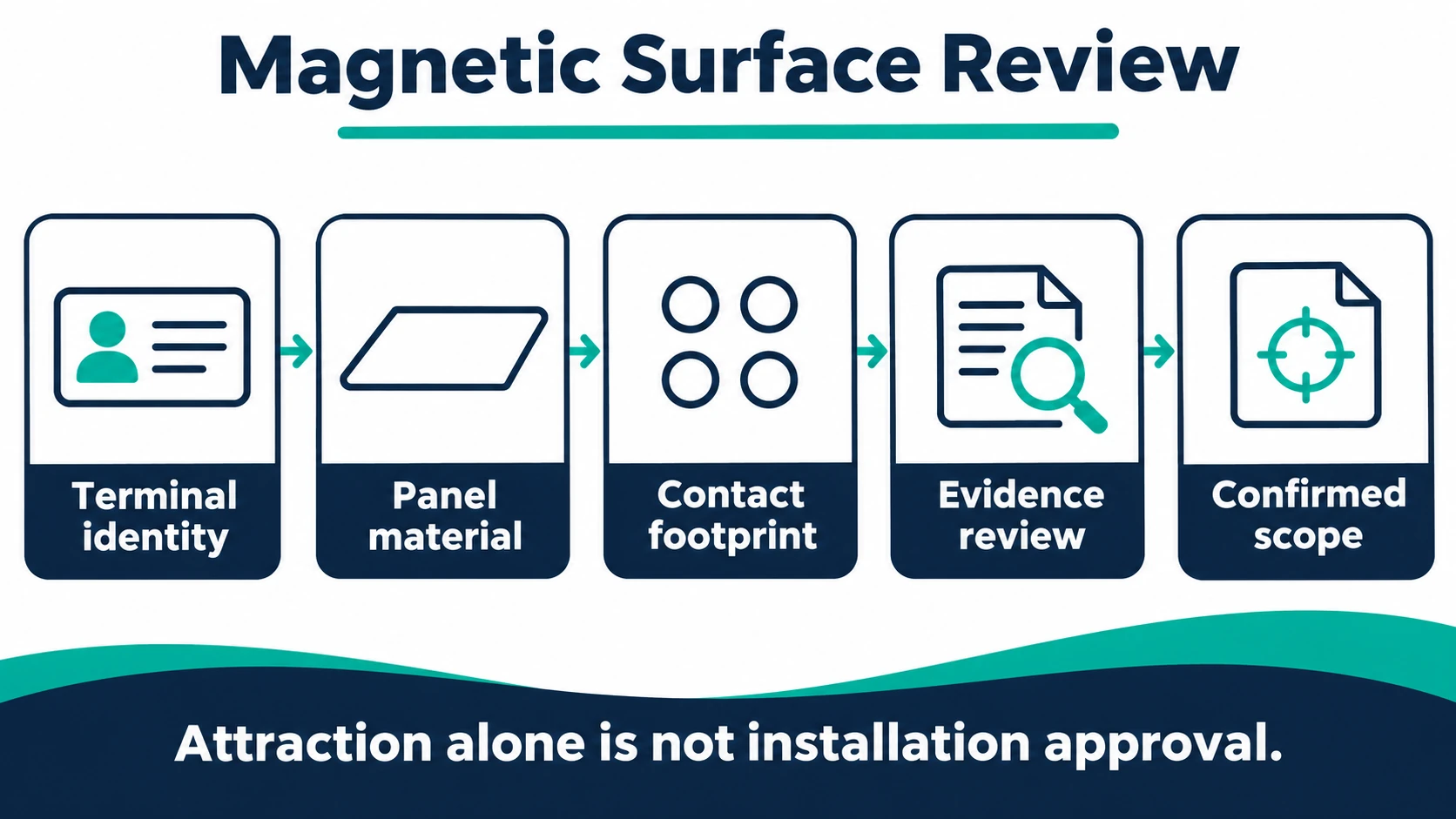
The useful output of this review is not a universal list of compatible vehicles. It is a record for one proposed panel and mount configuration. Separate what is known about the substrate from what is only observed at the surface.
| Evidence field | Record for the proposed location | Keep unresolved until confirmed |
|---|---|---|
| Substrate identity | Host documentation and exact panel location | Unknown alloy or underlying panel |
| Surface build-up | Coating, wrap or repair information available | Hidden layers and uncertain finish condition |
| Contact geometry | Footprint drawing and panel curvature | Seating of every intended contact base |
| Operating state | Stationary deployment or other requested state | Any unsupported moving use |
| Review scope | Named supplier and responsible installer | Acceptance evidence and excluded conditions |
A change of panel, finish or mount revision reopens the affected questions. The broader Starlink Mini mount-selection guide compares attachment families; this record addresses the narrower panel-evidence question and supplies no force, speed or wind acceptance threshold.
FAQ
Will a stronger magnet attach directly to an aluminum roof?
No. Increasing magnet strength does not make aluminum a suitable direct attracting target for this attachment approach.
Does magnetic attraction prove the roof mount is safe?
No. It is only one screening observation. Panel suitability, complete contact, configuration, operating conditions and applicable instructions still require review.
Does CRF’s listing establish road-use approval?
No verified road-speed, wind-load or vibration rating is provided on the reviewed page. Do not assume permission for moving-vehicle use.
Is the terminal included?
Do not assume so. The public page states that equipment and scenery shown for installation context are not stated as included; confirm the supplied scope in the quotation.
Request a surface-specific review
Send your terminal and surface information through the CRF magnetic mounting plate inquiry or email sales@szcrftech.com. Ask for a compatibility and evidence review, not a generic “fits all roofs” confirmation.
Request a B2B RFQ for the exact configuration and documentation scope. Images are AI-generated generic concepts, not exact CRF models, customer installations, approved procedures or performance evidence.