
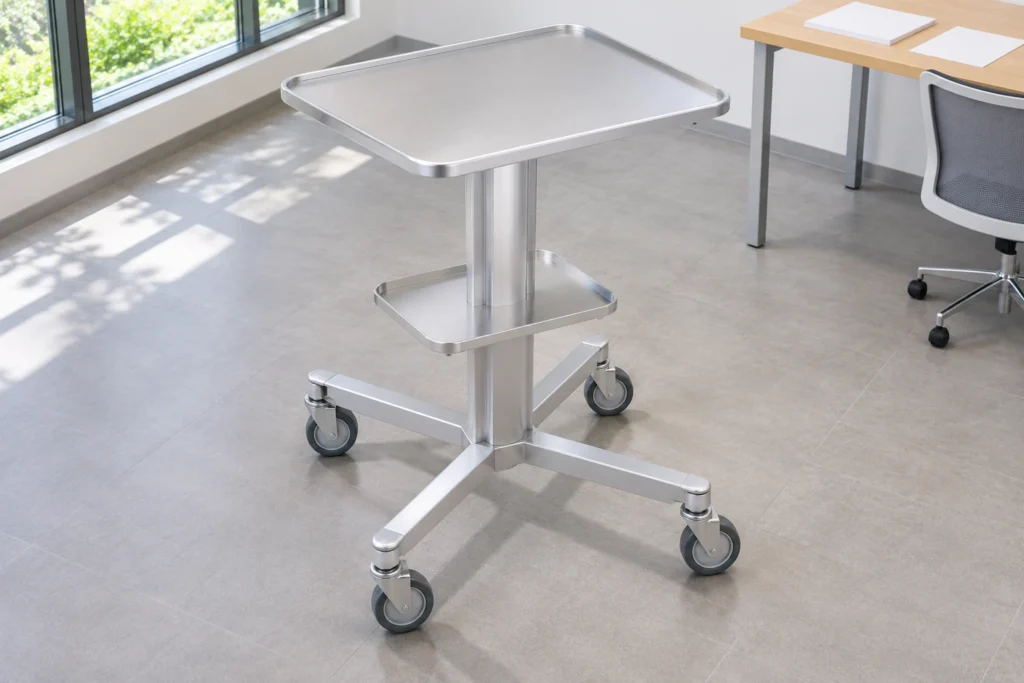
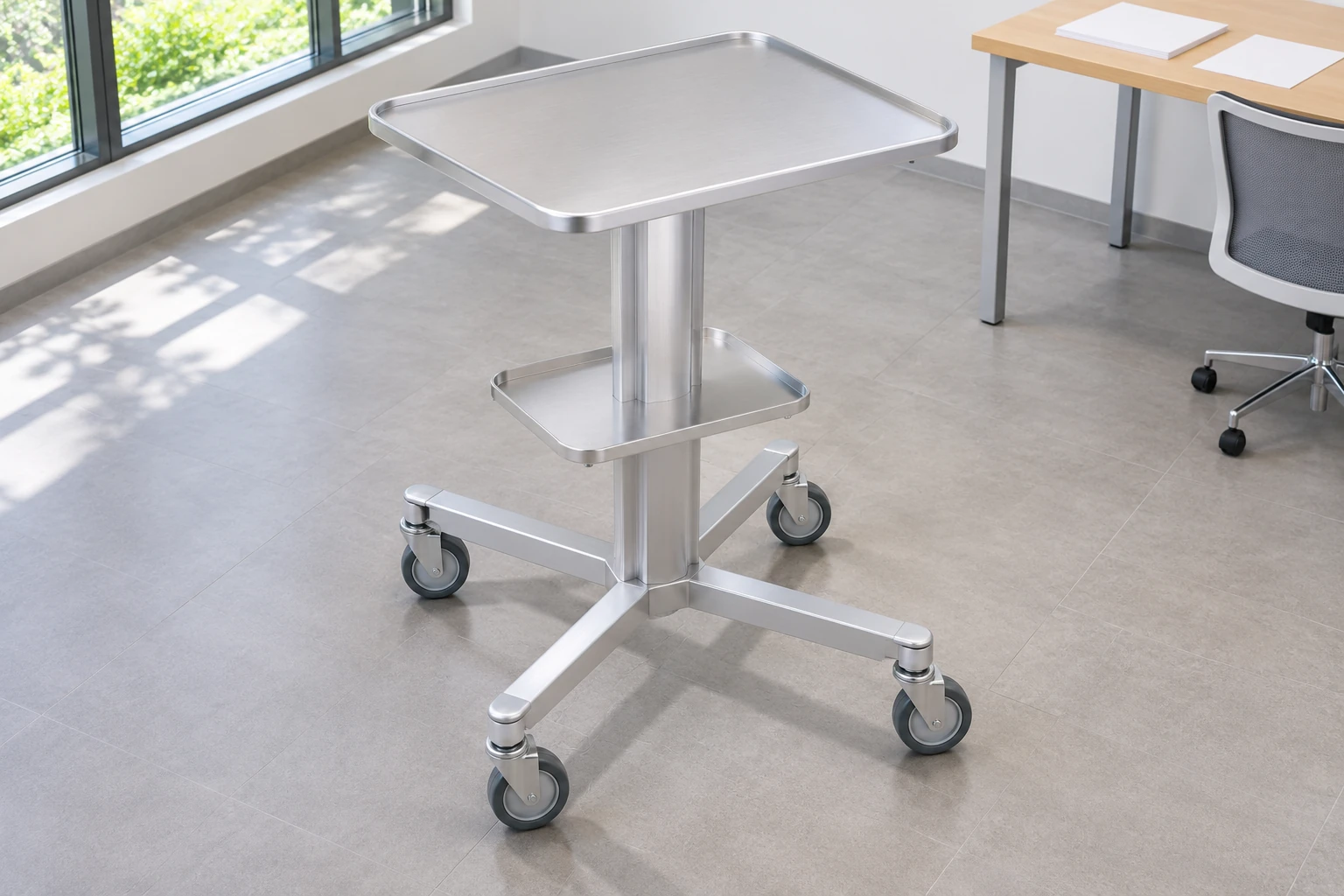
A medical cart ODM project and an OEM manufacturing project should be compared by the work each party performs, not by the label alone. Before selecting a route, define who provides the design, which interfaces may change, which deliverables are included and who controls the released configuration. Suppliers use OEM and ODM differently, so the quotation, drawings and agreement must establish the actual scope.
For buyers of aluminum-alloy medical equipment carts, the practical choice is often between manufacturing a buyer-controlled design, adapting a supplier platform and commissioning additional design work. This guide compares those purchasing routes. It is not a legal opinion, a promise of design ownership or proof that a supplier assumes responsibility for a completed medical system.
Compare the three routes behind the labels
Buyer-controlled design and manufacturing
In this route, the buyer provides a controlled design package and asks a manufacturer to produce the specified structure. The package must be sufficiently clear to manufacture and inspect: drawings, revisions, materials, interfaces, finishes, assembly requirements and acceptance criteria cannot remain scattered across informal messages.
The central purchasing question is whether the supplier is quoting manufacture to the supplied package or also providing design changes. A production suggestion is not automatically a released design revision. Agree how questions, substitutions and proposed improvements are reviewed before they enter the product.
Supplier-platform adaptation
A supplier platform can be a useful starting point when its main structure is close to the required configuration. The buyer and supplier then identify the specific changes: equipment interface, shelf position, holders, work surface or other permitted features.
The important distinction is between a confirmed existing feature and a proposed change. A platform photograph does not establish that every requested combination has been manufactured or reviewed. Define the exact reference, changed interfaces and evidence needed for the revised configuration.
Additional supplier-led design work
Where the requirements cannot be met by a defined adaptation, the project may require additional design work. The purchasing scope must identify the inputs, design activities, review stages and deliverables, rather than simply requesting an ODM cart.
Ask what is actually delivered at each stage and what remains with the supplier. Concept views, production drawings, editable design files, bills of materials and test records are different deliverables. Do not assume that paying for a sample transfers ownership or grants permission to manufacture the design elsewhere.
| Route | Buyer input that matters most | Deliverable to clarify | Main control risk |
|---|---|---|---|
| Buyer-controlled design | Released manufacturing package | Product made to the agreed revision and inspection scope | Informal changes entering production |
| Supplier-platform adaptation | Exact base reference and requested differences | Controlled revised configuration | Treating a proposed combination as already verified |
| Additional design work | Requirements, interfaces and review criteria | Defined design outputs and manufacturing scope | Unclear ownership, approval and handover obligations |
Start with the equipment and workflow requirements
Whichever route you choose, define the equipment the cart supports. Record the device models, dimensions, masses, support points, mounting interfaces, connectors, ventilation and service access. Include the accessories that change the layout and identify buyer-supplied items.
For a computer workstation, that may include the display, computer, keyboard, printer and scanner. For another equipment cart, it may be the main device and its storage or support accessories. Do not reuse one device’s interface package for another because the cases look similar.
Describe the operating and travel conditions that the supplier must review. Keep mandatory requirements separate from preferences and identify missing inputs. A supplier cannot meaningfully compare an existing platform with a new design if the required footprint, access or equipment set remains undefined.
Separate appearance changes from interface changes
A finish or branding request is not the same as relocating an equipment support, modifying a base or changing a height-adjustment assembly. Each can affect different parts of the design and evidence package.
Ask the supplier to identify which requests are standard options, which require an adaptation and which require additional development. Avoid assuming that a minor-looking visual change has no mechanical consequences. Equally, do not classify every color selection as a completely new engineering project.
Review the proposed changes on controlled views. Record which interfaces and dimensions remain unchanged, what has changed and which checks need to be repeated. The result should identify one real configuration, not an attractive collection of features taken from different products.
Make deliverables explicit before approving a sample
A sample is a physical reference, but it is not the entire project record. Define the drawing revision, bill of materials or agreed specification associated with it. Identify the equipment and accessories installed during the review and record any deviations.
Clarify whether the supplier provides assembly instructions, inspection records, applicable product documents and information needed for spare-part identification. Do not assume those documents are included because the quotation says custom manufacturing.
If editable drawings, tooling information or transfer support matter to your purchasing strategy, include them explicitly in the commercial discussion and have the responsible advisers review the agreement. This article does not establish intellectual-property rights or contractual terms for any project.
Assign verification instead of assuming it transfers with the label
OEM and ODM labels do not settle who is responsible for mechanical interfaces, completed-system electrical work, intended-use assessment or destination-market requirements. Identify the responsible parties and the evidence expected from each.
A mechanical cart supplier can review and manufacture an agreed structure within its actual scope. That does not automatically make it responsible for the buyer’s software, clinical workflow, connected equipment or regulatory submission. Conversely, a buyer-controlled drawing does not remove the need to define the manufacturer’s production and inspection responsibilities.
Avoid generic requests for certificates without identifying the product, configuration, market and applicable requirement. A company document or a report for another configuration may not answer the actual purchasing question. Confirm what documents apply and are available for the specific project.
Compare quotations on the same basis
Separate development work, sample supply, production supply and any agreed tooling or documentation deliverables. Define which items are included and which remain open. This guide does not state a universal MOQ, sample cost, development charge or production lead time.
Check that competing quotations represent the same configuration. A quote for a bare frame cannot be compared directly with one that includes reviewed equipment retention, accessory supports and assembly. Likewise, a supplier’s existing platform price does not establish the cost of a proposed redesign.
Record assumptions and exclusions in a way the buyer can act on. “Customer to provide final device interface drawing” identifies a dependency. An unexplained custom-product label does not. Close the dependency before accepting a configuration that relies on it.
Keep changes controlled after approval
Agree how a proposed change is raised, evaluated and released. That includes changes to buyer equipment as well as cart parts. A replacement monitor, a different printer or a revised device connector can affect interfaces even when the cart drawing has not changed.
Maintain an approved configuration record for repeated orders. Identify the drawing, sample, specification and relevant inspection criteria together. A previous shipment does not prove that a later informal variation has received the same review.
Spare parts need the same discipline. Specify how a replacement is identified and how revisions are handled. A component that looks similar may have a different fixing, material or relationship to the approved structure. Ask for the exact compatible replacement information rather than choosing by photograph alone.
Use CRF references to define a realistic starting point
CRF’s core offering includes aluminum-alloy medical equipment cart structures. Browse the medical equipment collection to select relevant real references and use the computer cart integration guide when the project involves a computer workstation.
Please contact us to review whether the actual requirement can use an existing configuration, needs a defined adaptation or requires further development. This comparison does not assert a particular contract model, design-transfer entitlement, certification, development schedule or capability beyond the scope confirmed for the project.

FAQ
What is the difference between medical cart OEM and ODM?
The labels often distinguish buyer-provided design from supplier-led design, but usage varies. Confirm the actual design work, manufacturing work, deliverables, ownership and approval responsibilities in the project documents.
Is changing a logo an ODM project?
Not necessarily. Branding can be a defined option on an existing product. It does not by itself establish that the supplier is performing a new design or transferring design rights.
Is adapting an existing platform always faster or cheaper?
No universal result can be promised. Compare the actual changed interfaces, verification needs, deliverables and quotation. A platform that requires extensive changes may not provide the expected benefit.
Does paying for a sample mean the buyer owns the design?
Do not assume so. Design rights, use permissions, tooling ownership and transfer deliverables require explicit commercial and legal agreement. Seek appropriate professional advice for those terms.
Who approves the completed medical system?
Assign the applicable responsibilities to the qualified parties for the intended product, configuration and market. A mechanical cart project or an OEM/ODM label is not completed-system approval.
Request a clearly scoped quotation
Please send an RFQ with your equipment register, existing design files where applicable, reference cart, requested changes, required deliverables, quantity and destination market. State which responsibilities you expect the supplier to accept so the proposal can address the actual work rather than an ambiguous OEM or ODM label.