
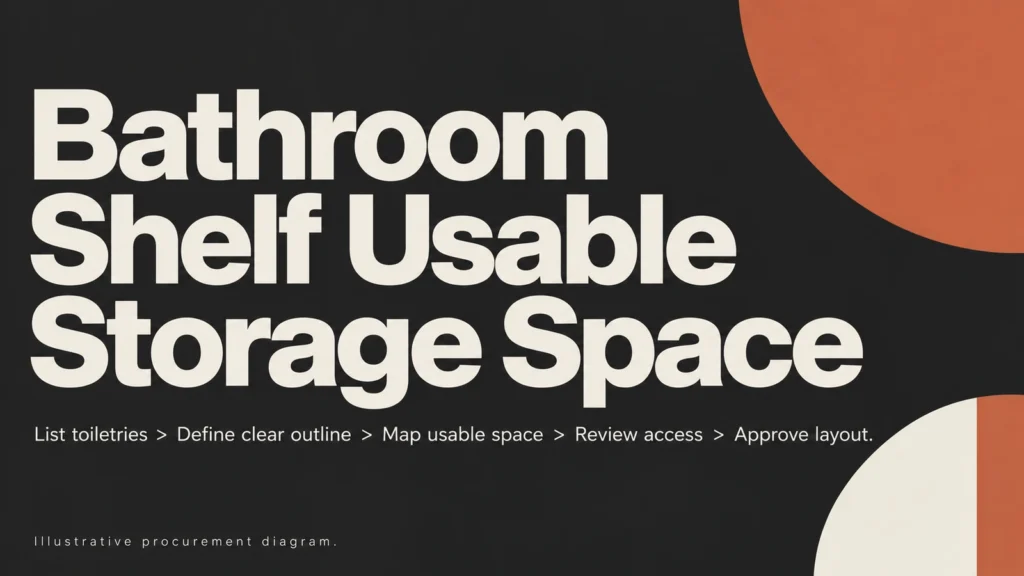

Compare bathroom shelves by the clear space available to the intended toiletries, not just their overall width and depth. Wall returns, drainage openings, raised edges, mounting features and the shape of the shelf can reduce or interrupt the area a bottle actually uses. A larger outer dimension does not necessarily mean a better fit for your storage list.
For a B2B order, define the usable-space requirement with representative containers and an approved sample. Do not turn a shelf-size comparison into an unverified load or safety claim.
Define usable space before comparing quotations
Usable storage space is the part of the shelf where the specified items can sit and be accessed as intended. It is not simply the bounding rectangle around the product. A triangular shelf and a rectangular shelf can have similar headline dimensions while accommodating different container arrangements.
The CRF stainless steel corner and rectangular bathroom shelf family includes wall-mounted formats with slotted surfaces. The family listing is a starting point for selecting a configuration, not evidence that all sizes, finishes and mounting methods share the same usable interior dimensions.
Specify the boundary being measured
Ask for both overall dimensions and the relevant clear internal dimensions on a configuration drawing. Identify whether a measurement includes raised edges, brackets or wall-facing returns. On a corner shelf, request enough dimensions to describe the actual outline rather than using one side length as a proxy for storage capacity.
Record the measurement reference and units consistently. A supplier drawing and a buyer sketch should identify the same surfaces before their values are compared.
For the broader shape decision, see corner versus rectangular bathroom shelves. For container-base and opening interaction, use the bottle-fit and drainage review. This guide owns the clear-dimension fields in the RFQ: it does not replace either review.

Turn a toiletries list into a sample layout
Select representative bottles, tubes and other intended items. Record their base outline and the space needed to retrieve or operate them. Group them by actual use rather than filling every visible gap in a photograph.
A bottle may sit on the shelf yet remain difficult to lift out. A pump may require access that a tightly packed layout does not provide. Where items have irregular bases, review contact with the actual shelf surface rather than assuming a broad outside dimension establishes support.
This layout review is about dimensional suitability. It does not establish that pressing a pump on a wall-mounted shelf is permitted. Confirm intended use and installation limits separately with the supplier.

Use a like-for-like comparison sheet
| Field to record | What it tells the buyer | What it does not prove |
|---|---|---|
| Overall width and projection | Product envelope for placement | Clear bottle-storage area |
| Clear internal outline | Space inside relevant boundaries | Support for every base shape |
| Surface openings and interruptions | Where container bases contact the shelf | A validated drainage or load result |
| Retrieval clearance | Whether the proposed arrangement can be accessed | Universal suitability for all users |
| Configuration identifier | Which sample or drawing was reviewed | That another variant has identical dimensions |
Keep this sheet tied to one selected version. If the shape or edge detail changes, review the affected layout again instead of carrying forward a generic “fits toiletries” approval.
Compare corner and rectangular formats for the same inventory
Corner format
A corner format can place storage at a suitable wall junction, but its outline may narrow away from the front edge. Test where the widest container bases can sit without overlapping a boundary. Do not estimate how many bottles fit from a perspective photograph.
Confirm wall geometry and installation suitability separately. A nominally corner-shaped product is not evidence that it can be forced onto an uneven or unsuitable wall junction.
Rectangular format
A rectangular format may permit a different row arrangement, but brackets, edges and surface interruptions still matter. Review the actual clear span and front-to-back space. The product envelope must also suit its placement; usable storage is only one part of the selection decision.
Neither format should be described as the better choice in every bathroom. Compare the same inventory, access requirements and mounting constraints on the selected configurations.
What to request with the sample
Ask for the configuration drawing, selected shape and finish, mounting details, included parts and applicable instructions. Provide the representative-item list and photographs of the intended arrangement, without suggesting they are customer installations or tested use cases.
During sample review, record which items fit, which cannot be retrieved as intended and which need further clarification. Keep the sample identifier with the review. Document whether any dimensions are provisional and ask the supplier to resolve them before a bulk-order approval.
Do not infer material grade, corrosion performance, load capacity or mounting strength from the storage layout. Those are separate specification and evidence questions. Confirm the ordered version and documentation instead of importing claims from a visually similar shelf.
RFQ checklist for bathroom shelf storage layouts
Send CRF the required format, available installation envelope, representative container details, desired arrangement, finish, mounting requirements, quantity, packaging needs and destination. Request confirmation of the clear usable dimensions for the proposed configuration.
If more than one layout is acceptable, identify the priority—for example, accommodating one wider container versus a row of narrower containers. Ask that the quotation identify its assumptions and exclusions. Do not specify a universal bottle count without defining the containers.
FAQ
Can I compare shelves using width alone?
No. Depth, outline, boundaries, surface details and retrieval access can all affect whether the intended arrangement works. Compare the selected configurations with the same inventory.
Does a shelf photograph show its usable capacity?
It can help identify a format, but perspective and missing dimensions limit what can be concluded. Request a drawing and sample review rather than deriving capacity from the image.
Is a rectangular shelf always more usable than a corner shelf?
No. It depends on the intended items and available installation space. Neither shape establishes a universal advantage without a defined layout.
Can a successful bottle-layout review confirm load capacity?
No. Dimensional fit is not a load test. Confirm the approved installation and use limits through the appropriate documentation and review.
Request a bathroom shelf layout review
Request a CRF bathroom shelf RFQ with your intended toiletries and installation envelope. We can review the proposed configuration and the details needed for sample approval. Availability, customization feasibility and commercial terms must be confirmed in the quotation.