
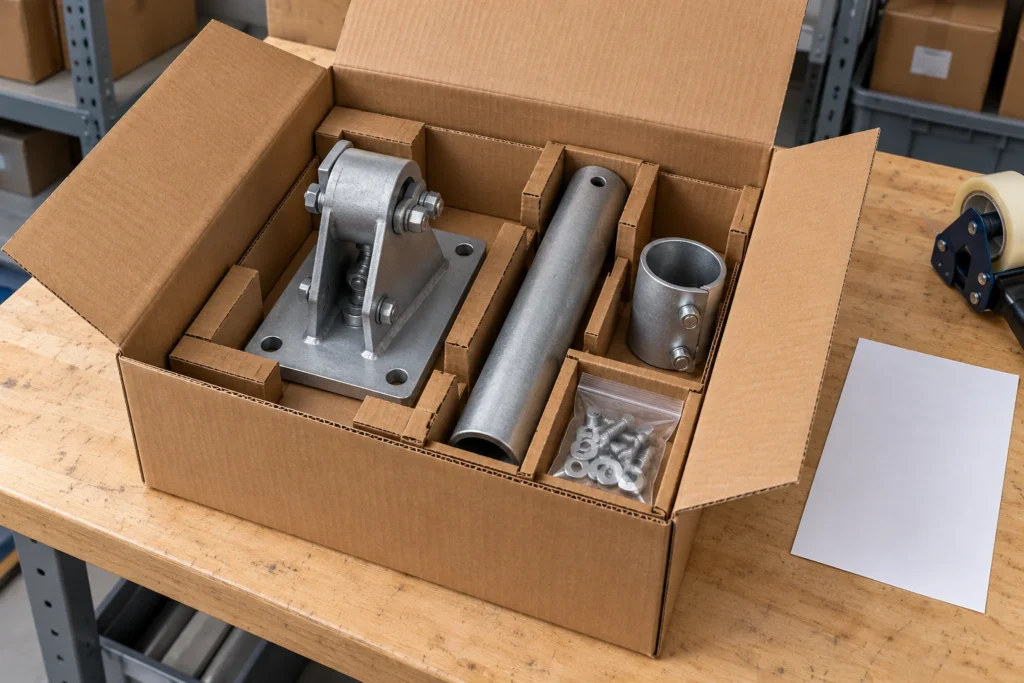
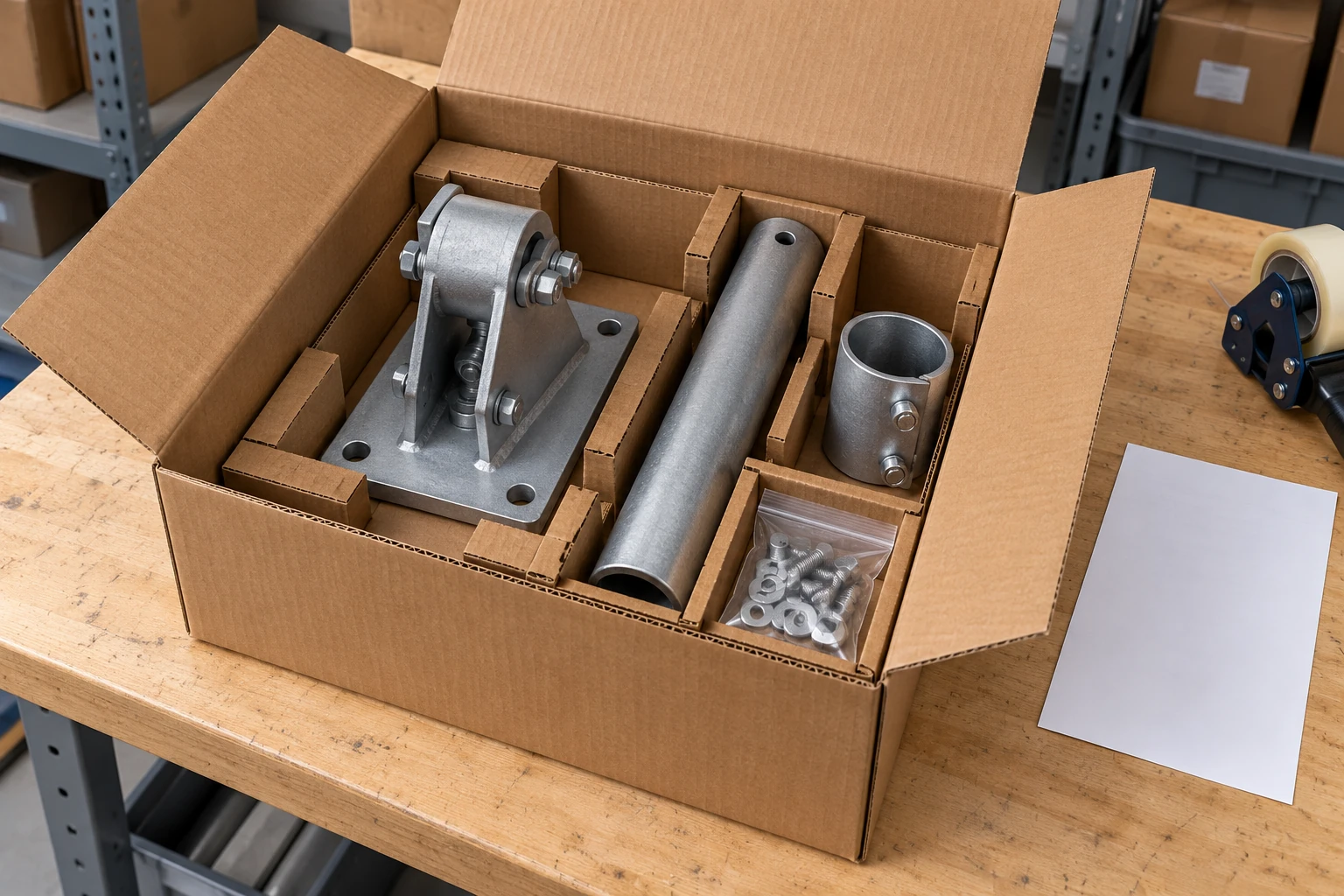
For a Starlink-compatible mounting kit, packaging approval should establish which components belong in each package, how they are identified, and what evidence links the packed shipment to the approved kit revision. A photograph of a bracket does not confirm that the mast, adapter, fasteners or sealing materials are included. Agree on a packing list and review a representative packed sample before approving the shipment configuration.
This is a procurement checklist for third-party mounting accessories. It is not a Starlink installation manual, a shipping-test certificate or a statement of official affiliation.
Start with the exact CRF kit
CRF’s aluminum alloy wall and roof mount for Starlink Gen 3 is a relevant product reference. Its listing describes a pivot base, mast, pipe adapter and installation hardware, while asking buyers to confirm the final bill of materials for each order.
The page distinguishes listed product information from packaging information. That distinction matters: product dimensions describe the item, while shipping dimensions describe the packed unit. Neither substitutes for the other. This guide does not repeat listing measurements as a verified carton specification or promise any particular kit content.
Ask for a current packing-list revision that matches the quotation. A component shown in supplier imagery remains a confirmation item until the order documentation identifies it as included.
Build a package-level contents map
Identify the main components
List the main bracket, mast and adapter separately where they form part of the agreed configuration. Give each an identifier that corresponds to the approved drawing or parts list. State whether they are packed assembled or separated. Do not infer the assembly state from a staged product picture.
If one order includes multiple configurations, require an unambiguous way to distinguish cartons. “Starlink mount” alone is not a sufficient identifier for kits with different terminal interfaces or installation arrangements.
Keep small parts traceable
For each agreed fastener or accessory bag, specify the part reference and quantity. The objective is to make receipt checking possible without identifying every loose part by appearance. Separate supplied components from installer-provided items.
Sealant or sealing materials, if included, need their own confirmation. Ask for product identification, handling information and any applicable shelf-life requirements. Do not assume that an unidentified material is appropriate for a roof substrate or that including it establishes waterproofing performance.
Identify what is not included
Record exclusions such as the terminal, cable, router, installation tools or substrate-specific anchors when applicable. Do not copy exclusions from another supplier’s kit. The signed quotation and packing list should establish the actual boundary of supply.
Review protection without inventing test claims
Ask the supplier to show how the agreed components are restrained and separated in the packed sample. Check whether metal parts can move against coated surfaces, small bags can migrate, or projecting parts can contact the carton. These are review questions, not proof that a particular packaging material or construction is required.
If a distribution test is needed, agree on its scope and acceptance criteria with an appropriate packaging specialist. A carton photograph cannot prove a drop test, transit certification, moisture resistance or suitability for every carrier. Do not describe an untested packing proposal as certified protection.
| Packaging decision | Evidence to request | What it does not prove |
|---|---|---|
| Kit identity | Quotation and packing-list revision | Universal terminal compatibility |
| Component completeness | Itemized list and packed-sample record | Installation suitability |
| Small-part control | Bag identifiers and agreed quantities | Correct torque or structural capacity |
| Surface separation | Photos of the actual packing arrangement | A validated transit-test result |
| Shipping information | Confirmed packed dimensions and gross weight | Net product dimensions or weight |
| Exclusions | Written boundary of supply | That excluded parts are unnecessary |
Do not borrow an official kit’s packing list
The official Starlink Standard Accessories Guide separates compatibility, kit contents, recommended tools and package information. Those are useful information categories, but they describe the official accessories in that document—not CRF’s kit.
Do not transfer the official guide’s screw quantities, compatibility labels, package weights or installation claims to a third-party product. Terminal naming and accessory interfaces can differ. Confirm the exact terminal identifier and CRF kit revision independently.
For earlier product selection, see CRF’s Starlink Gen 3 roof mount sourcing checklist. Use this packaging article only after the proposed mounting configuration has been identified; it does not replace fitment or engineering review.
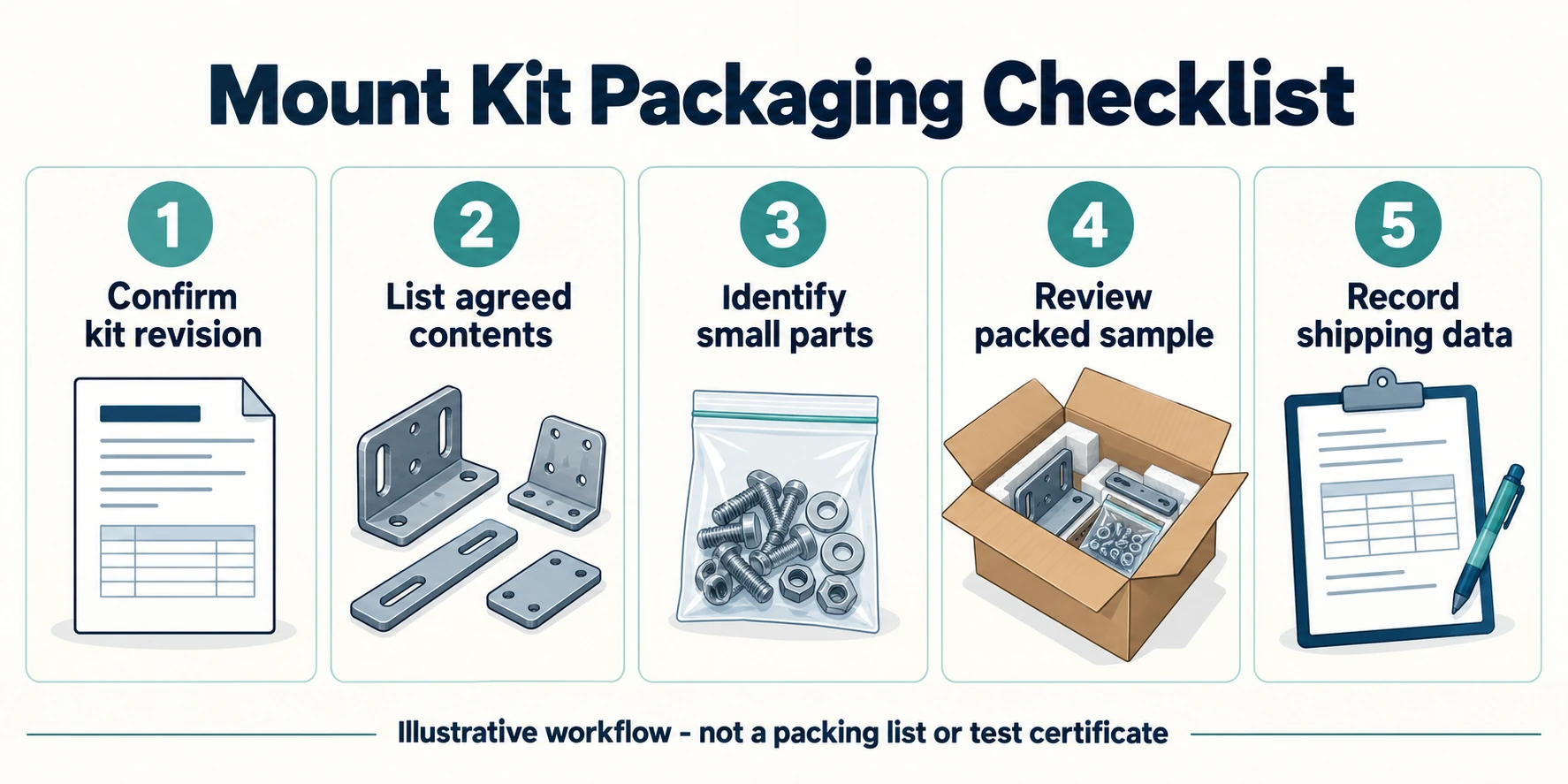
A practical packed-sample approval record
Record the kit identifier, packing-list revision, component and bag identifiers, packing arrangement, observed exceptions and responsible approver. Request views that show both the contents before closure and the final labeled package. Keep those records associated with the agreed sample rather than treating an unrelated stock photograph as evidence.
If the supplier changes a component, bagging arrangement or packaging method after approval, ask whether a renewed packed-sample review is needed. Agree on how differences at receipt will be documented and resolved. No delivery schedule, replacement policy or inspection service is assumed here.
FAQ
Does a complete kit always include the Starlink terminal?
No. A mounting accessory kit should not be assumed to include a terminal or networking equipment. Confirm inclusions and exclusions in the quotation.
Are the shipping weight and product weight interchangeable?
No. Gross shipping weight includes the agreed packaging and packed contents. Request both values with clear definitions when they are needed for purchasing or logistics.
Can CRF use the official Starlink accessory packing list?
Only the order-specific CRF parts list establishes CRF’s boundary of supply. An official accessory guide is not evidence that CRF supplies the same components or has official certification.
Does packed-sample approval confirm safe roof installation?
No. Substrate strength, fastener selection, weather sealing, wind exposure and applicable local requirements need qualified project-specific review. Packaging completeness is a separate acceptance decision.
Request an order-specific packing proposal
Send CRF an RFQ with your terminal identifier, proposed mount configuration, quantity, destination and packaging requirements. Ask for a quotation-linked contents list and packed-sample review proposal. CRF should confirm the final components, packaging and commercial terms before an order is accepted.