
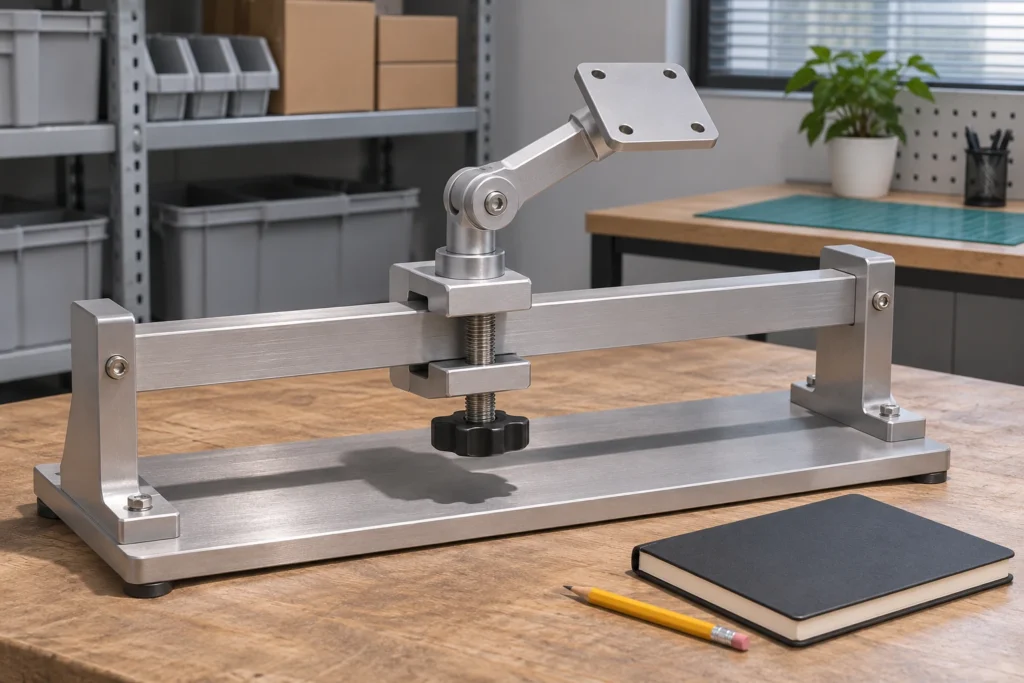
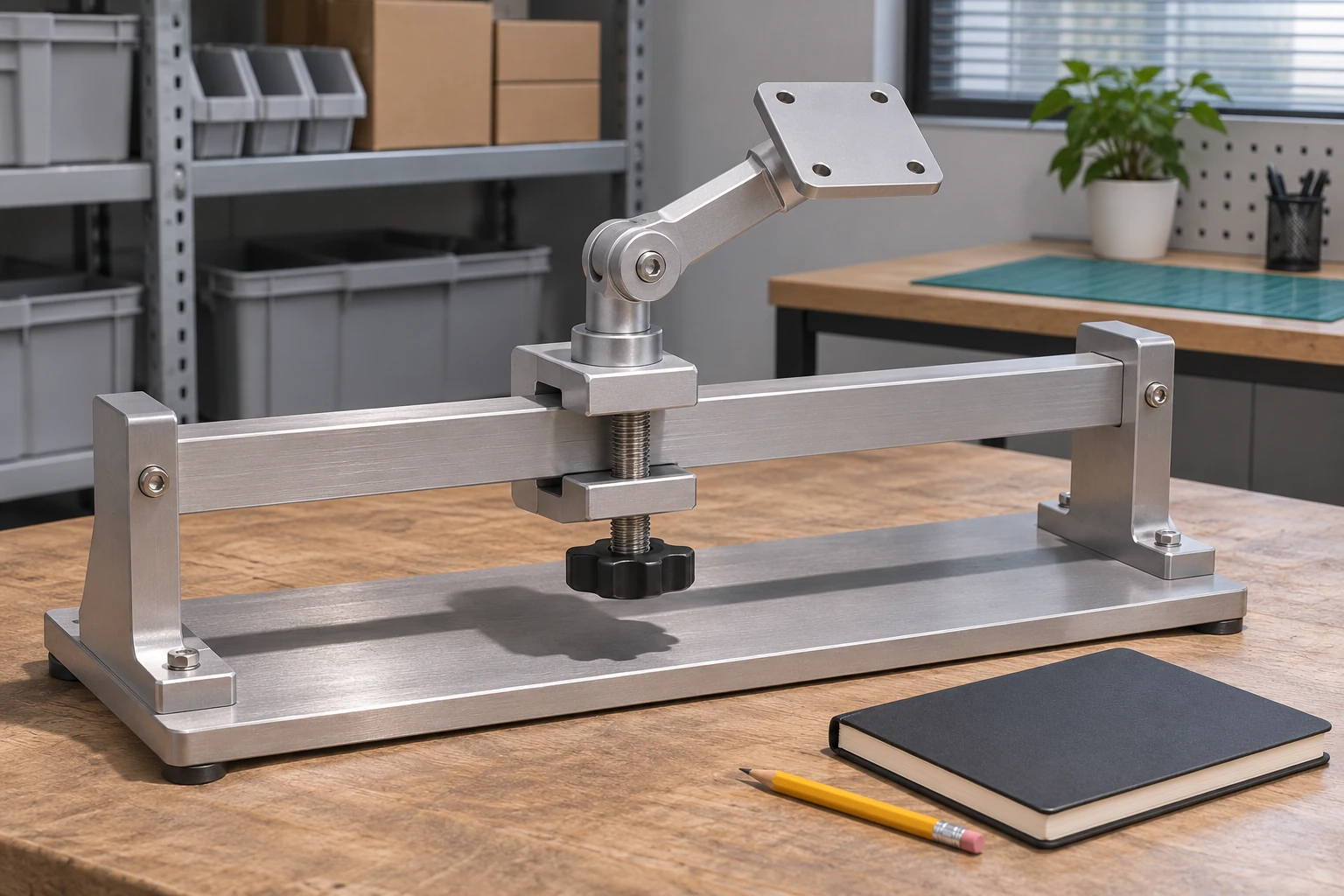
Approve a Starlink Mini clamp mount sample against a defined terminal, support-bar profile, kit list and installation review—not a product name or a successful hand fit alone. Keep mechanical fit, site suitability and operational permission as separate approval questions. A clamp that fits a bar is not automatically approved for road use, wind exposure or every Starlink Mini revision.
This checklist helps distributors and OEM buyers structure a sample review before placing a larger order. It is not an installation procedure or a structural certification.
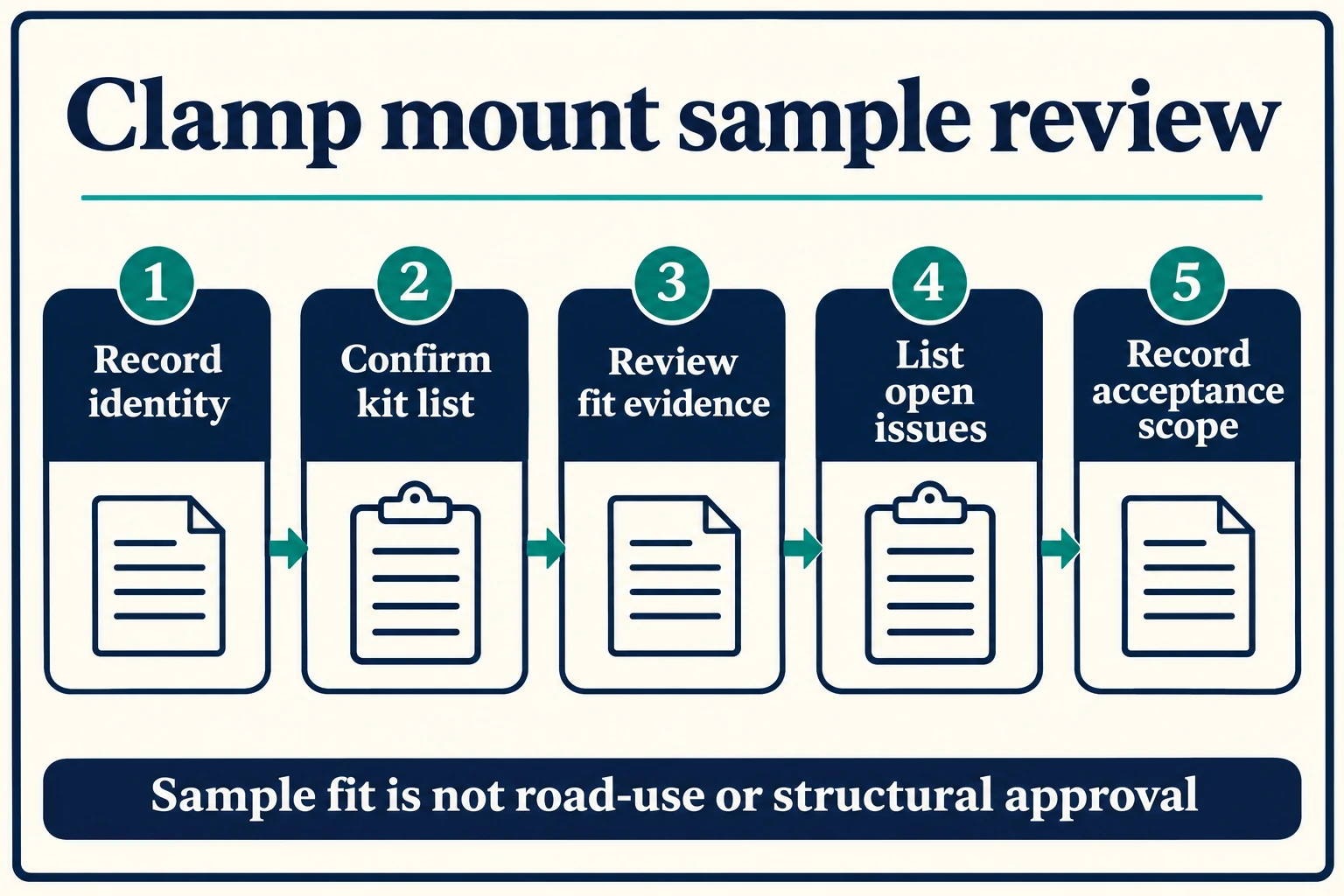
Freeze the exact sample identity
Record the terminal and mount variant
Identify the terminal version from its label or documentation and record the selected mount configuration, finish, fasteners and any adapter. Avoid treating “Mini,” “Gen 3” and “V4” as interchangeable compatibility labels. If the supplier listing uses an ambiguous version name, resolve it in writing before approving the sample.
The CRF adjustable aluminum vehicle pole clamp mount for Starlink Mini is a relevant configuration for review. Its listing describes a clamp with articulated joints and hand-tightened fasteners for compatible roof-rack support bars. The same listing records supplier-image fitment information and explicitly says rounded profiles are unsuitable. Review the exact profile and selected orientation with CRF rather than generalizing the product title into universal pole compatibility.
Identify the receiving support
Record the actual support bar, its cross-section, surface coating and available access around the clamp. If using a representative bar for the sample review, document how it corresponds to the intended installation. A test fixture that is easier to grip than the real support can produce a misleading approval.
Do not substitute catalogue drawings for an assessment of the rack and vehicle structure. A qualified installer must determine whether the proposed support and installation are appropriate.
Compare the proposed sample with the agreed kit
| Approval item | Evidence to request | What not to infer |
|---|---|---|
| Product identity | Label, revision and configuration photographs | That all similarly named mounts are identical |
| Terminal interface | Drawing and review using the specified terminal or approved fixture | Universal compatibility across terminal versions |
| Clamp engagement | Profile drawing, orientation and sample observations | A published range alone proves secure retention |
| Fastener set | Itemized parts list and supplier instructions | Hand tightening defines a verified torque |
| Cable access | Connector and service-route review | A visible opening proves suitable bend clearance |
| Intended operation | Application-specific requirements and applicable evidence | A successful stationary fit proves road-use suitability |
Treat missing information as an open issue. Do not label the sample “approved” while relying on an unconfirmed part or an intended later adjustment.
Review the sample in a controlled sequence
Check parts and condition before fitting
Compare the received kit with the agreed list. Record missing hardware, damaged surfaces, thread condition and any difference from the approved drawing. Photograph identification features and the complete kit before assembly. Do not use image-generation output as incoming inspection evidence.
The CRF product page records supplier packaging illustrations, but final inclusions need confirmation for the ordered configuration. Do not promise an accessory merely because it appears in contextual installation imagery.
Ask the supplier to define the fitting method
Obtain the assembly sequence, permitted orientation and fastener instructions for the exact sample. If a torque, locking method or secondary-retention arrangement is required, request a documented specification and qualified review. Do not invent a torque value from bolt appearance or use this article as a substitute for instructions.
Check that the proposed installation does not require forcing the clamp onto an unsuitable profile. Any local modification or substituted fastener should trigger a new review rather than being silently included in the approval.
Review the full occupied envelope
Include the terminal, connectors and cable route when checking access. Record whether the cable can be connected, supported and serviced without interfering with joints or clamp hardware. Evaluate adjacent rack equipment and any required adjustment path. Obtain the equipment manufacturer’s requirements for connector engagement and cable handling.
A physical fit review does not determine whether the location provides a suitable view of the sky. Follow the current official guidance for the exact Starlink terminal and review the proposed site separately.
Separate sample fit from operational approval
A sample can meet an agreed dimensional requirement while operational questions remain unresolved. Distinguish these statuses in the review record:
- Identity confirmed: the reviewed variant and kit match the request.
- Fit reviewed: the specified terminal and support interface have been assessed.
- Application review pending: structural, environmental or operating requirements remain open.
- Commercial sample accepted: acceptance scope and exclusions are written into the purchasing record.
The CRF listing does not establish a validated speed limit, wind-load result or vibration rating. Do not convert promotional wording into a performance specification. If the intended use involves a moving vehicle or vessel, obtain application-specific engineering review and applicable requirements before use. Any service-plan or equipment-use permissions must be checked separately with the relevant provider.
Keep the sample and production order connected
Record the sample identifier, drawing revision, photographs, agreed parts list and unresolved issues in one approval pack. Request supplier confirmation before changes to joint geometry, contact surfaces, fasteners or terminal attachment. Define how production parts will be compared with the accepted sample and what discrepancies require review.
This is different from choosing a support-bar size: it preserves the identity and limits of what was actually assessed. A later batch should not inherit approval from an earlier sample with undocumented differences.
FAQ
Does hand fitting prove the mount is safe on a moving vehicle?
No. Physical fit is only one part of the application review. Road-use conditions and structural suitability require appropriate evidence and qualified assessment.
Can a rounded support be approved if the clamp seems to grip?
Do not override the listing’s rounded-profile exclusion based on an informal fit attempt. Ask CRF for a suitable configuration and obtain an application-specific review.
Is a Starlink Standard installation guide enough for a Mini mount?
No. Use current instructions for the exact terminal and accessory. Instructions for another kit may provide context but do not establish compatibility or an installation procedure for this mount.
Should a sample approval record include exclusions?
Yes. State the reviewed configuration, intended application, remaining issues and conditions outside the approval scope. This prevents a limited fit review from becoming an unsupported performance claim.
Request a sample-review RFQ
Send CRF the terminal identification, support-bar drawing, proposed mount orientation, intended operating conditions, quantity and destination. Request a configuration-specific sample proposal, kit list and review documentation. Contact CRF for a B2B quotation or email sales@szcrftech.com. Confirm specifications, commercial terms and any required testing in writing before ordering.