
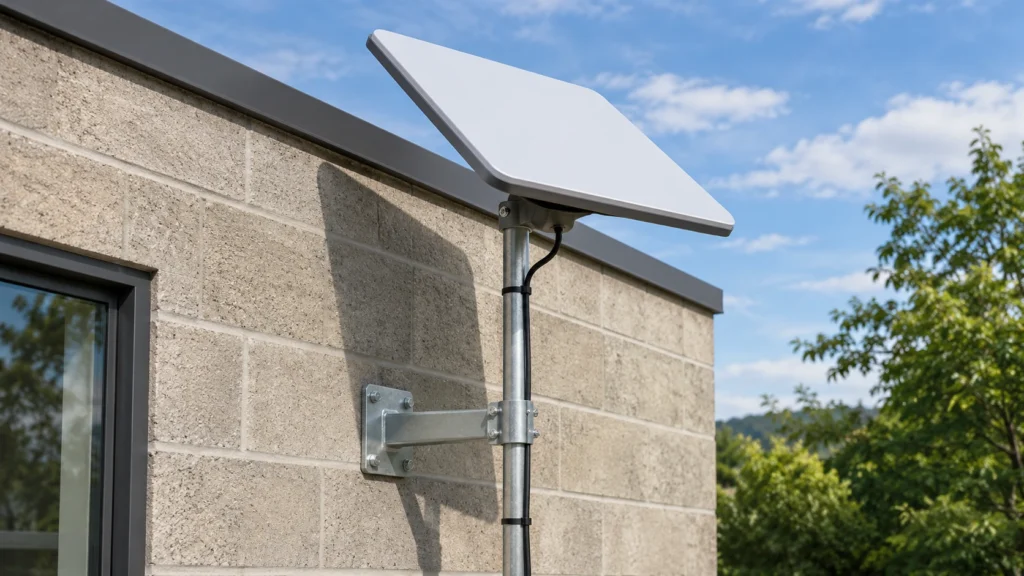
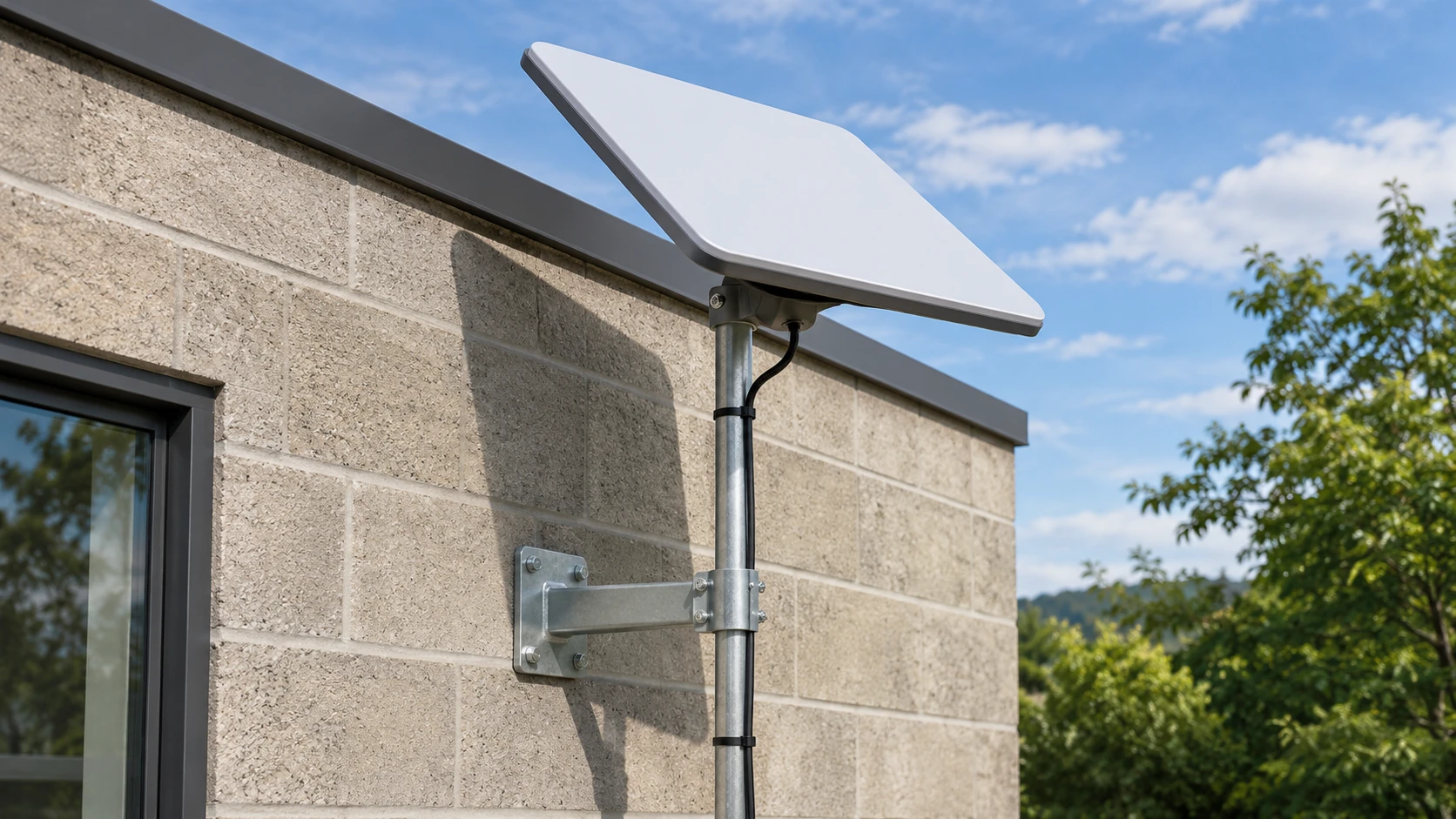
A Starlink Gen 3 mounting kit should not be approved for a wall or roof solely because screws are included. The terminal interface, mounting bracket and building attachment are separate compatibility questions. Before ordering, identify the structural substrate and ask the responsible installer to confirm the attachment and waterproofing approach for the exact project.
This is a procurement guide, not an installation specification. It does not provide structural calculations, anchor selection, drilling instructions or permission to work at height.
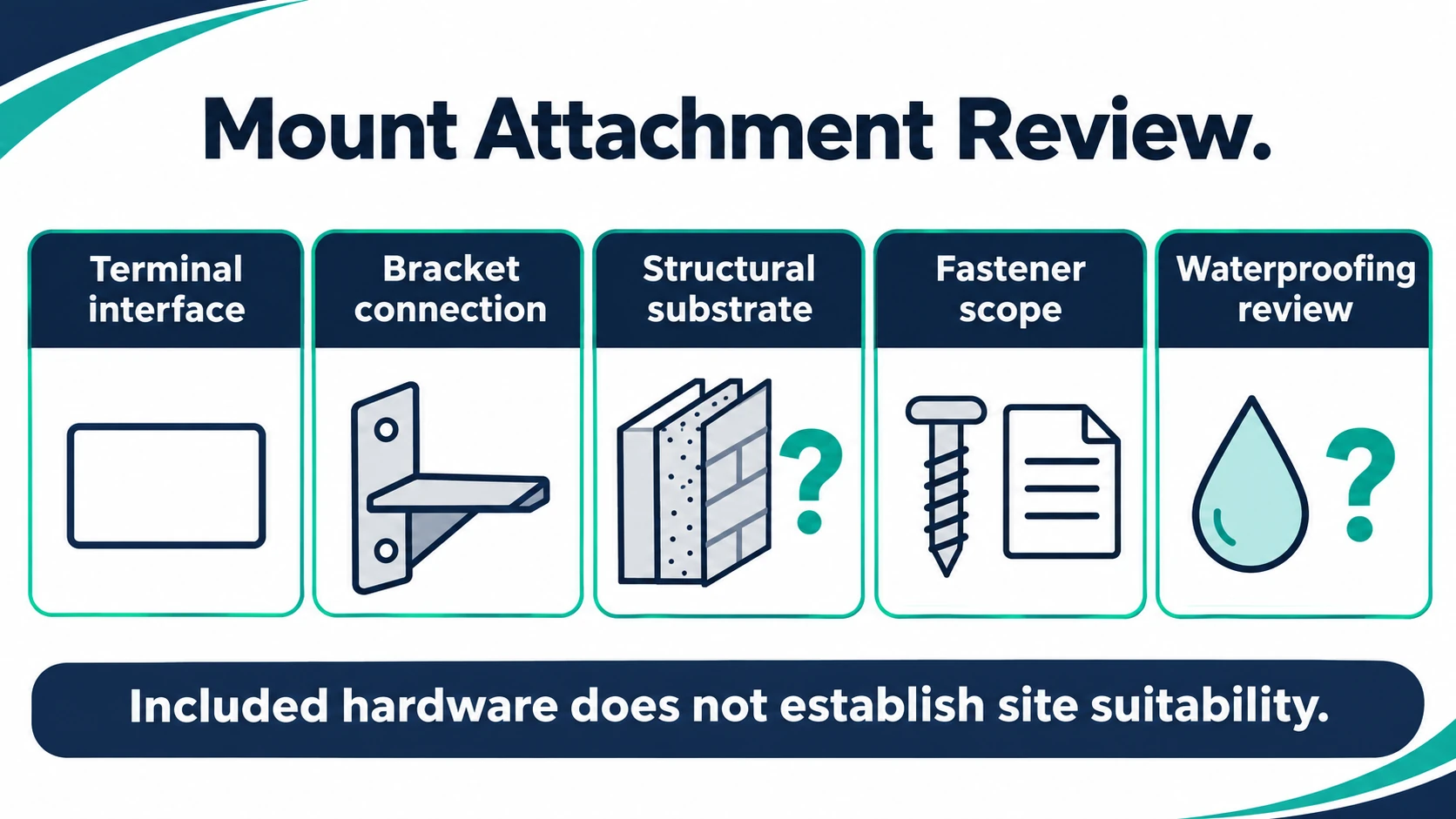
Distinguish three interfaces before comparing kits
Terminal to adapter
Identify the exact terminal version and the adapter proposed for it. A reference to Gen 3 does not establish compatibility with Mini, every other generation or an unspecified replacement terminal. Request a version-specific drawing and confirmation of the supplied interface.
Adapter and mast to bracket
Confirm which components belong to the quoted configuration and how they connect. Do not assume that the pipe dimensions or locking arrangement of an official accessory apply to a third-party kit.
Bracket to building
A bracket’s mounting holes do not identify the material behind a finished wall or roof covering. Supply the installer with information about the supporting structure, finish layers, access and site conditions. Unknown substrate information is an open design input, not a reason to choose a generic fastener.
What the CRF product reference establishes
The CRF aluminum wall and roof mount for Starlink Gen 3 is a current product reference for fixed mounting projects. Its page describes a pivot base, mast, pipe adapter and installation hardware, while requiring confirmation of the final bill of materials and fastener specifications.
The page does not provide a verified numerical wind rating, load-test result or official Starlink certification. An included screw or sealant component must not be presented as evidence that the kit suits every roof, wall, climate or local building requirement.
Compare site inputs instead of assuming universal hardware
| Site description | Information the buyer should supply | Question for the responsible installer |
|---|---|---|
| Framed wall with exterior cladding | Supporting structure, cladding build-up and access | What approved attachment reaches the suitable structural support? |
| Masonry or concrete location | Actual substrate condition and proposed bracket position | Which project-specific anchor design and limitations apply? |
| Sloped roof | Roof build-up, pitch, structural support and access | How will attachment and waterproofing be designed together? |
| Fascia or roof edge | Material, supporting structure and clearance | Is the proposed location structurally suitable and clear of obstructions? |
| Unknown wall or roof construction | Available drawings and survey findings | What additional assessment is needed before hardware is specified? |
This table organizes questions; it does not endorse an attachment method for any substrate.
Review the hardware list without turning it into an engineering claim
Ask the supplier to identify the included parts and their specifications for the quoted revision. Ask the installer which supplied parts, if any, are appropriate for the actual site. Keep replacement or additional site-specific hardware visible in the project scope.
Keep sealing separate from structural retention
Sealing a penetration does not establish structural adequacy. Structural retention does not establish a watertight roof detail. Request a coordinated installation plan from the responsible professionals rather than treating sealant tape or a screw count as a complete solution.
Preserve cable and adjustment access
Include the intended cable route and access for adjustment in the review. A proposed bracket position may appear acceptable in a product illustration but conflict with the real roof edge, cable entry or service access. An illustrative residential image is not an installation approval for the buyer’s building.
Use official documentation within its proper scope
The official Starlink Standard accessories guide distinguishes wall mounts, pivot mounts and pipe adapters. It is useful for understanding why accessory type and terminal version matter. Its product-specific dimensions, installation limits and hardware descriptions must not be transferred to CRF hardware without separate confirmation.
For the broader commercial checklist, see CRF’s Starlink Gen 3 roof mount sourcing guide. The present guide addresses the narrower building-attachment review, not general mount selection.
RFQ checklist for a substrate-specific review
Send the exact terminal version, proposed mount reference, wall or roof construction information, bracket location, site photographs you are authorized to share, cable route, relevant environmental requirements, quantity and destination. Ask for a clearly identified component list and note which building-attachment details remain the installer’s responsibility.
Do not request or accept an invented wind rating, universal anchor claim or official certification. If supporting evidence is unavailable, keep the relevant requirement open.
Building-attachment responsibility record
Before comparing the final kit quotation, make a short handover record separating supplier scope from site design. The record should identify the exact mount revision, the available substrate evidence, the party responsible for the building connection, unresolved inputs and the document that will close each question. This is a way to organize procurement questions, not to specify anchors.
| Review boundary | Evidence to request | Decision owner to identify |
|---|---|---|
| Mount supply | Drawing revision and explicit supplied-parts list | Mount supplier |
| Building support | Site construction information and assessment scope | Responsible site professional |
| Attachment design | Project-specific fastening documentation | Responsible installer or engineer |
| Water management | Building-envelope detail and review responsibility | Responsible roofing or waterproofing professional |
| Order release | Open-item disposition and agreed exclusions | Buyer and named project reviewers |
If the substrate is unknown, retain that as an open input. Do not silently replace a project-specific attachment requirement with the screws visible in a kit image.
FAQ
Are the included screws suitable for any wall?
No universal suitability is established by inclusion in a kit. Attachment requires a review of the actual structure and project requirements.
Can I use official Starlink mount limits for this CRF kit?
Not automatically. Official accessory specifications describe those accessories. Confirm the CRF configuration separately.
Does aluminum alloy establish corrosion performance?
The material name alone does not establish a grade, coating performance or suitability for a particular exposure. Request the applicable material and finish information.
Can CRF confirm the complete building installation from a product photo?
A photo can support an initial discussion but is not a structural or waterproofing assessment. The responsible installer must evaluate the site.
Request a mounting-kit quotation
Use the CRF contact page to send the product reference and project inputs. Request a configuration-specific quotation and component confirmation. Installation suitability, required evidence and local compliance must be resolved before the mounting arrangement is accepted.
Request a B2B RFQ for the exact configuration and documentation scope. Images are AI-generated generic concepts, not exact CRF models, customer installations, approved procedures or performance evidence.